Rouse Award: Evaluating influence of popular fiction on suffrage movement

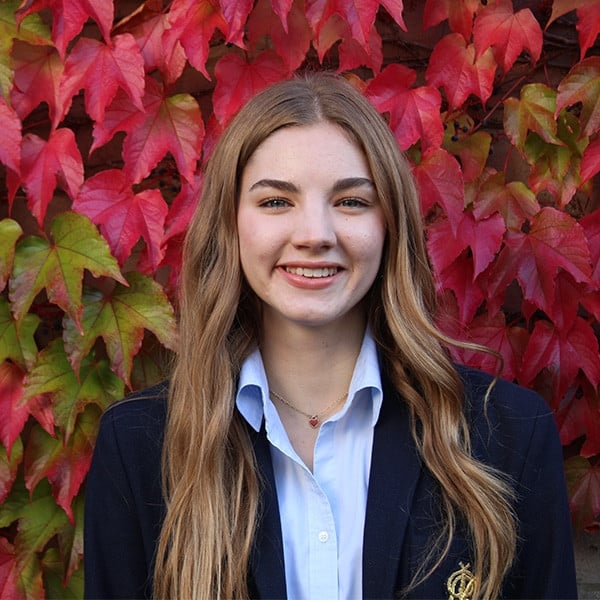
Alice (Upper Sixth) assessed the extent to which literary fiction contributed to the success of the suffrage movement for her Rouse Award-winning research.
As a keen English and history student, Alice decided to investigate how the messaging in popular books of the time played a part in women receiving the right to vote in the UK in 1918.
She said: “I knew I wanted to do a project combining English and history because I’m looking to read English at university and I’m really enjoying my history A level.
“I remember having a history lesson a few years ago about the suffrage movement and that really stuck with me, so I thought it would be interesting to look into that and see what element of literature I could bring into it.”
After researching papers and academic journals with articles on a similar theme, Alice focused her attention on three works – EM Forster’s Howards End, The Tree of Heaven by May Sinclair and Gertrude Colmore’s novel Suffragette Sally.
Alice said: “With Howards End, which is a very famous novel, suffrage was not the main theme, but it does discuss it and it was a very popular book at its time.
“May Sinclair was quite an interesting author to look into because she was popular in her day, but has been largely forgotten today. The Tree of Heaven takes place during World War I, so it features the historical themes of that time, including the suffrage movement with which one of the main characters becomes involved.
“Suffragette Sally was more like a piece of propaganda, so I looked at a variety of books that engaged with the theme to a wide range of degrees.
“It was challenging to try to draw it all together in the essay, but it was very rewarding and I enjoyed reading some books that I probably wouldn’t have done otherwise.”
From her investigation, Alice felt popular fiction had played a key role in paving the way for women to have the right to vote.
She said: “When we look at the suffrage movement, we think more of the militant or more violent acts that took place, but the power of words shouldn’t be underestimated either.
“Lots of people would have been reading books around that time, and these novels would have provoked discussion and for people to think more about suffrage.”
Read Alice’s research in full at our Perse Research website.