Perse engineers earn coveted Arkwright Scholarships
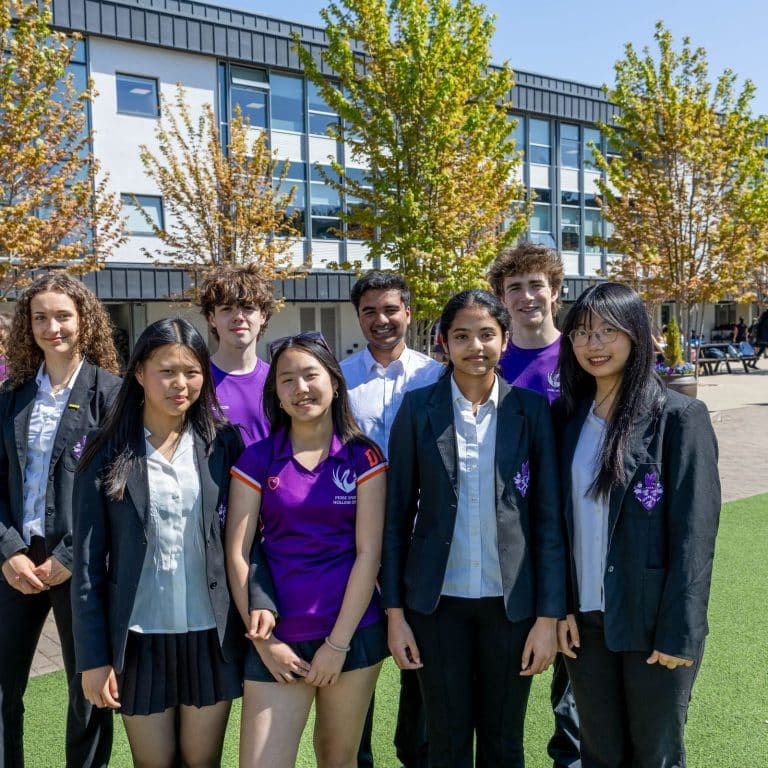
Nine Perse Year 11 students have been awarded Arkwright Scholarships in 2026, continuing The Perse School’s proud tradition of nurturing the next generation of engineering talent.

Arkwright Engineering Scholarships, awarded by The Smallpeice Trust, are among the most competitive engineering scholarships available to students in the UK, and aimed at identifying and supporting the most talented young engineers of the future.
Open to students in Year 11, the scholarships are specifically designed for those with the ambition and ability to pursue a career in engineering or technical design, and are highly regarded by universities and employers alike. Our nine Perse scholars will each receive mentoring from an industrial sponsor, networking days, the possibility of work experience and workplace visits, and financial support for their A-level studies.
To earn their place, each student completed a rigorous and competitive process, submitting a personal project, sitting an aptitude test, and attending an interview. We are enormously proud of all nine of them.
Two of the scholars, Viki and Yajur, have shared details of their standout personal projects:
Viki
Viki tackled the challenge of noise in community dining settings, using context exploration, surveys and primary user interviews to understand the problem before developing her solution.
She said: “I came up with a design which hung over the table, therefore is out of the way of the dining experience. It is a canopy of arches that cross over the table; each arch is hung to ‘connect’ two people’s conversations. It is extendable to therefore adapt to different seating arrangements.
“Each arch is designed to guide sound over the table as well as absorb any external noise, therefore allowing people to communicate clearly as well as reducing noise pollution.
“I made this out of laminating flexi-ply, cork and felt. I designed and 3D printed special hinges to allow me to connect all the arches and accommodate for all ranges of motion. I tested it thoroughly and concluded that it was indeed effective and worked well, but of course, there are always improvements to make.”
Yajur
Yajur’s project took on the challenge of sustainable energy, designing a device that attaches to a bicycle and harvests electricity from the rotation of the wheel to charge a phone.
He said: “I really enjoyed the process, and I found it rewarding applying my knowledge of physics to a functioning, real world product.”
Congratulations to Viki, Yajur, and all seven of their fellow scholars on this outstanding achievement. We look forward to seeing where their engineering journeys take them.