Skilled Perse scholar secures a sensational six A* A level grades
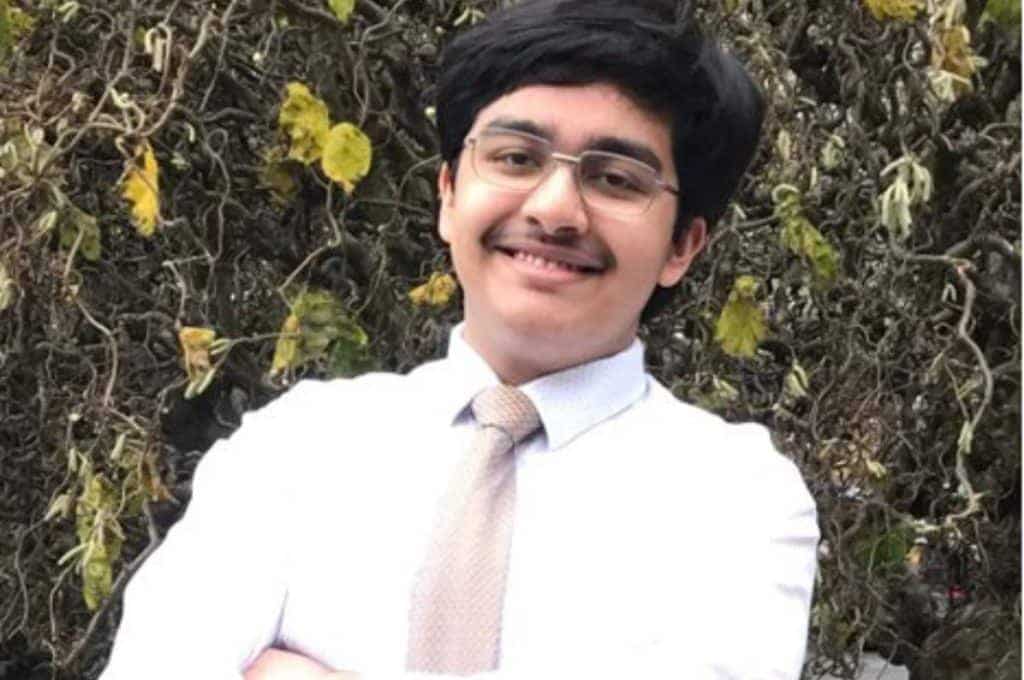
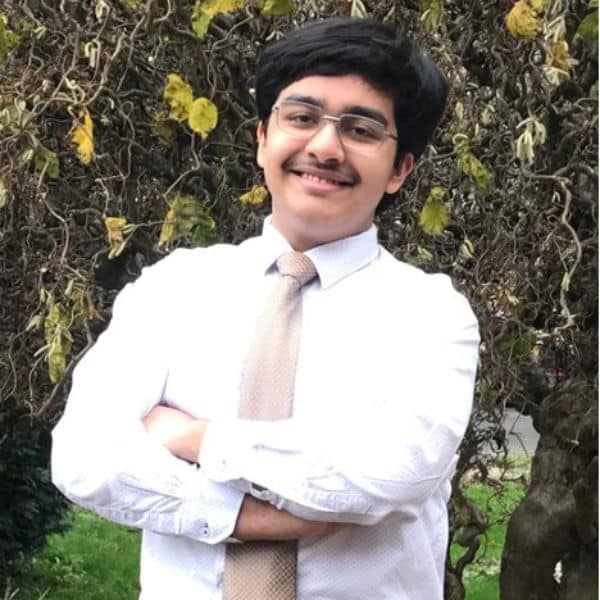
Accomplished academic Neelkantha (Upper Sixth) is celebrating achieving an astounding six A* grades at A level.
He attained top marks across the board in maths, computer science (both completed in Lower Sixth), further maths, biology, chemistry and physics. In addition, he secured grades S (the highest mark) and 1 in this year’s two STEP maths papers.
Having previously taken 17 GCSE (or equivalent) qualifications, Neelkantha said: “I felt since I enjoyed and loved the science subjects so much, I couldn’t really drop any of them for my A levels!
“I am absolutely overjoyed, ecstatic and relieved too. My hard work bore fruit and I am one step closer to my dream of practising medicine.”
Neelkantha explained there was no secret to his exam success beyond diligent study and having a passion for his subjects.
He said: “I have enjoyed taking on new challenges and have always tried to keep a positive attitude in working towards my goals.
“I think what is most important is you actually do what interests you the most, choose subjects you love and that bring you the most joy to learn about. Then it doesn’t seem like a lot of work at all! Also, I’d say have dreams, but also build a firm resolve to achieve them.”
Besides his phenomenal A level success, Neelkantha has lived up to the Perse value of intellectual curiosity and scholarship with his achievements beyond the curriculum.
Last year he developed an innovative program called WordMiner, allowing researchers to sort through online databases much more rapidly, while using different filters to refine the process.
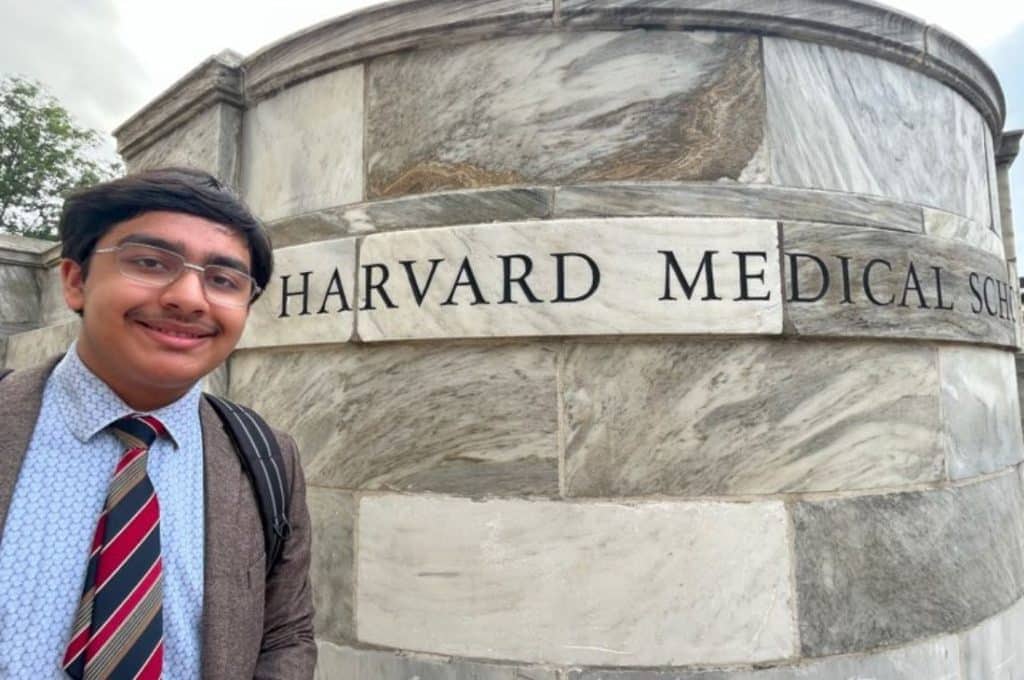
As a result of those efforts, Neelkantha spent time last summer working with a research group on an endocrinology project at the Harvard Medical School-affiliated Brigham and Women’s Hospital in Boston, with support from the Perse Travel Award scheme.
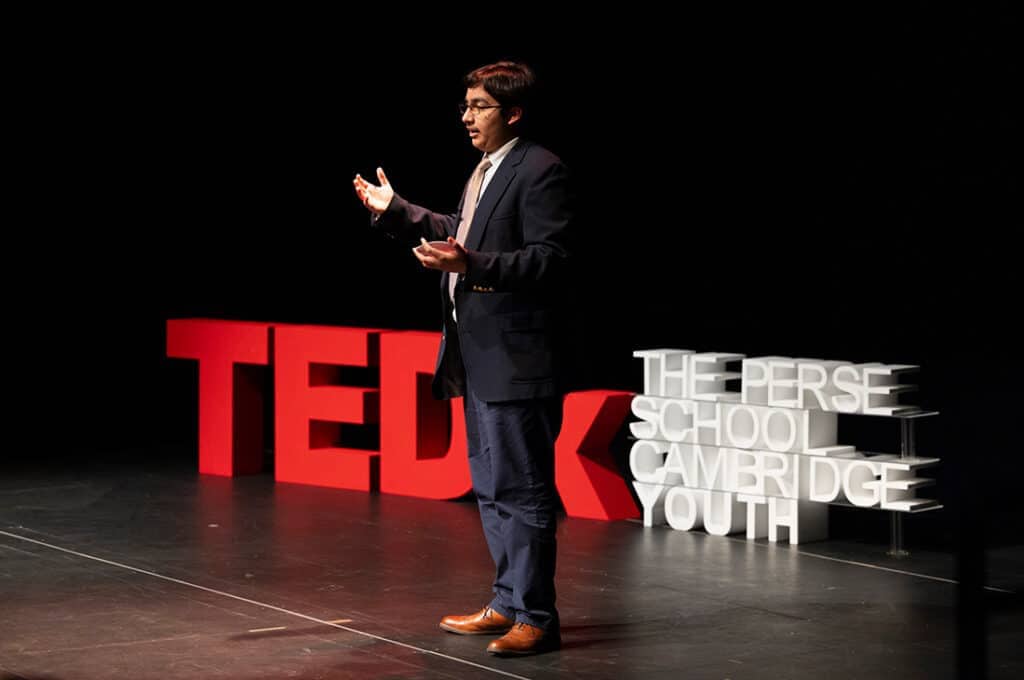
Further highlighting his interest in this field, Neelkantha spoke on the topic of the application of brain-machine interfaces on medicine and therapy at the TEDx The Perse School Cambridge Youth event.
In addition, he was runner-up at the International Logic Olympiad with fellow Perse students Hercules (Lower Sixth) and Ryan (Year 11) at Stanford University this summer, having been awarded the highest honour of Gold Scholar for being in the top 5% of participants globally in the inaugural online edition in 2024.
However, Neelkantha felt the supportive and encouraging environment he found at The Perse, right from joining the Prep, had played a big part in helping him achieve his goals.
He said: “I’ve had a truly great time at The Perse. I am grateful to all my A level teachers for everything they have done for us, their students, over the last two years. It’s been a jam-packed, fast-paced finale to an exciting journey.
“Moreover, I thank all my teachers at The Perse over the years, who I truly believe have encouraged me, nurtured my intellectual drive and helped sculpt me into a scholar, a researcher and an academic.
“The Perse is an amazing environment to study and grow up in and I have so many fond memories of my time here. I shall always cherish them.”
Following his A level success, Neelkantha is relishing the chance to begin reading medicine at Cambridge’s Gonville & Caius College.
He said: “I am very excited at the prospect. I am particularly looking forward to meeting so many like-minded people in a hive of intellectual curiosity and opportunity.”
Beyond university, Neelkantha wishes to engage in clinical practice and scientific research with the aim of providing mutual benefits in both areas.
“I want to integrate scientific research into patient care to improve patient lives and to reciprocally allow patient cases to further scientific research – a bidirectional flow of information to provide a scientific and medicinal win-win,” he said.
“In terms of speciality, I am keeping my options open, but I am keen to practise neurology and paediatrics.
“Ultimately, I would really like to harness machine learning and AI power to facilitate early diagnosis of neurological and other disorders and perhaps use brain-machine interfaces to effect therapeutic outcomes.”