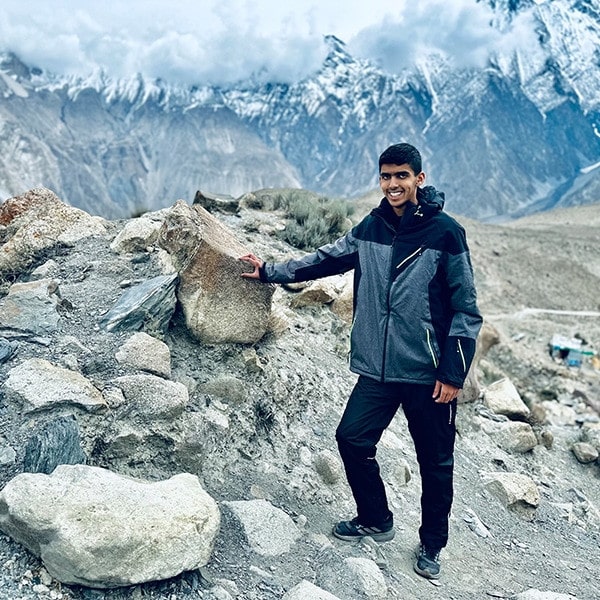
Perse pupil aims to bring ancient language back to life
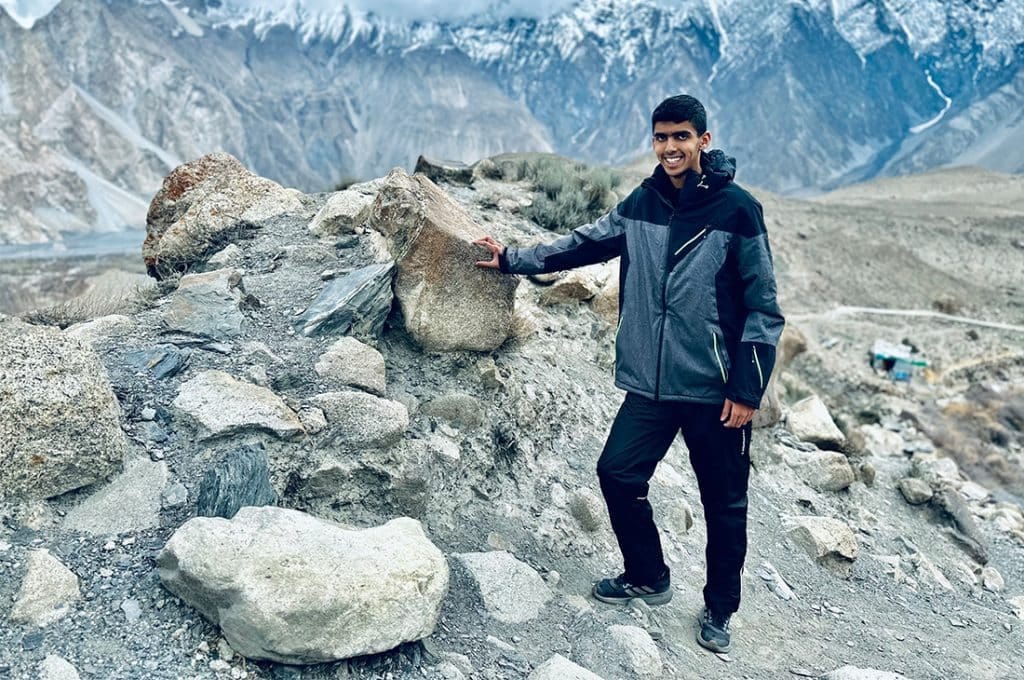
A love of linguistics and history has inspired Umar (Year 9) to try to revive an ancient language in a remote region of Pakistan.
With support from local volunteers, he is attempting to bring the language of Badeshi, which is spoken by a handful of elderly people and thought to be as old as ancient Egyptian, back to life.
Umar said: “I’m very interested in Silk Road history and languages and I thought this was a perfect opportunity for me to look at both as one project and a great way to help the community in that part of the country.
“It came after I read an article that said Badeshi only had three speakers left, so I did a lot of research into it. I found two people who have done some research into Badeshi, so I contacted both and one of them responded within the hour, which was amazing.”
That person was Zubair Torwali, who won the 2016 Public Peace Prize for his work in re-establishing the almost-extinct language of Torwali in the same Swat Valley area of Pakistan where the remaining speakers of Badeshi exist.
Umar began corresponding with Mr Torwali, founder of Idara Baraye Taleem-o-Taraqi, an organisation promoting the rights of marginalised language communities in northern Pakistan, in February.
Over Easter, he travelled with his family to the region, which borders Afghanistan, by car and foot to meet Mr Torwali and start work on the project.


Umar was overwhelmed with the reception they had from the local community.
“Generally, people in Pakistan are very hospitable anyway,” said Umar. “Everywhere we went, we had offers to stay the night and have meals. We were so taken aback at the level of kindness that we experienced.
“It was a humbling experience as well because we take what we have here for granted and with all the facilities we have, you realise when you go there how lucky you are.”
Umar will return to the region this summer to continue his work, boosted by a laptop donated by the Perse IT department to help Mr Torwali’s local research team in their efforts to support him.
He said: “We’ve located 10 people who speak Badeshi, but they are all 85 and over, so that’s why time is of the essence with this.
“At one time it was widely spoken across the region, but I just think as Pakistan has grown as a nation, there are different socio-economic factors that have led to Badeshi being almost extinct, such as Urdu becoming the main national language, people moving away for work, and the Taliban insurgency in the Swat Valley region.
“That’s why the area it’s spoken in has got narrower and narrower and why it’s hard to find anyone from a younger generation who speaks it.”
The ultimate goal of the project is to create an alphabet for Badeshi before producing dictionaries of words translated into Urdu and English to try to ensure its survival.
Umar said: “As Badeshi is a purely oral language, we need to transcribe it first by taking lots of recordings of people speaking it.
“However, because it’s a completely different language to Urdu, you must create a new alphabet to go with that. Something we don’t even know yet is whether it would have the same type of script.
“We need to do a phonetic analysis of each syllable, so I think we’re leaning towards more of a Farsi or Arabic script at the moment, but there could even be Russian elements coming into it and some European characters as well.
“The main priority is once we’ve got a list of the words down, we can then start a reclamation programme between younger and older generations, because it’s one thing Badeshi being preserved in a book and another preserving it with the people.”
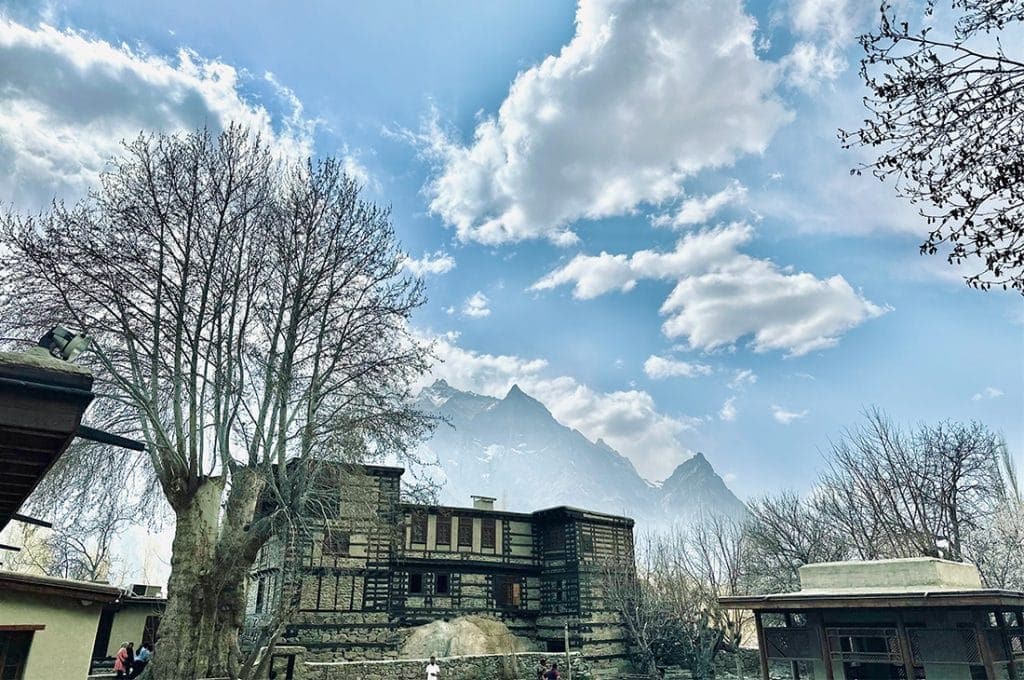


Umar and his local research team aim to carry out a social survey, determining the number of Badeshi speakers and their highest concentrations before tracing where their family members have spread across Pakistan to discover how much they might remember of the language.
He is hopeful his project will prove fruitful in the revival of the language within a wider community.
“I feel really encouraged because this has already happened with the Torwali language, with people even changing their surnames to Torwali to identify with it and their pride in who they are, so there’s no reason it cannot happen again,” said Umar.
“There are going to be a lot of hurdles – transcribing the language, collating it into an alphabet, finding people across the country who are of this ethnic background.
“However, I think the biggest challenge is the remote location and how old the speakers are, so it’s a project where everything is going to have to be run as efficiently as possible.
“The whole process for me is going to be an uphill challenge, but that’s the beauty of it and what makes it exciting.”