Perse Languages Week celebrates cultures, creativity and connection
Students across the Upper School took part in a wide range of activities during Perse Languages Week from 21 to 25 September, exploring languages, cultures and traditions from around the world ahead of the European Day of Languages on 26 September.

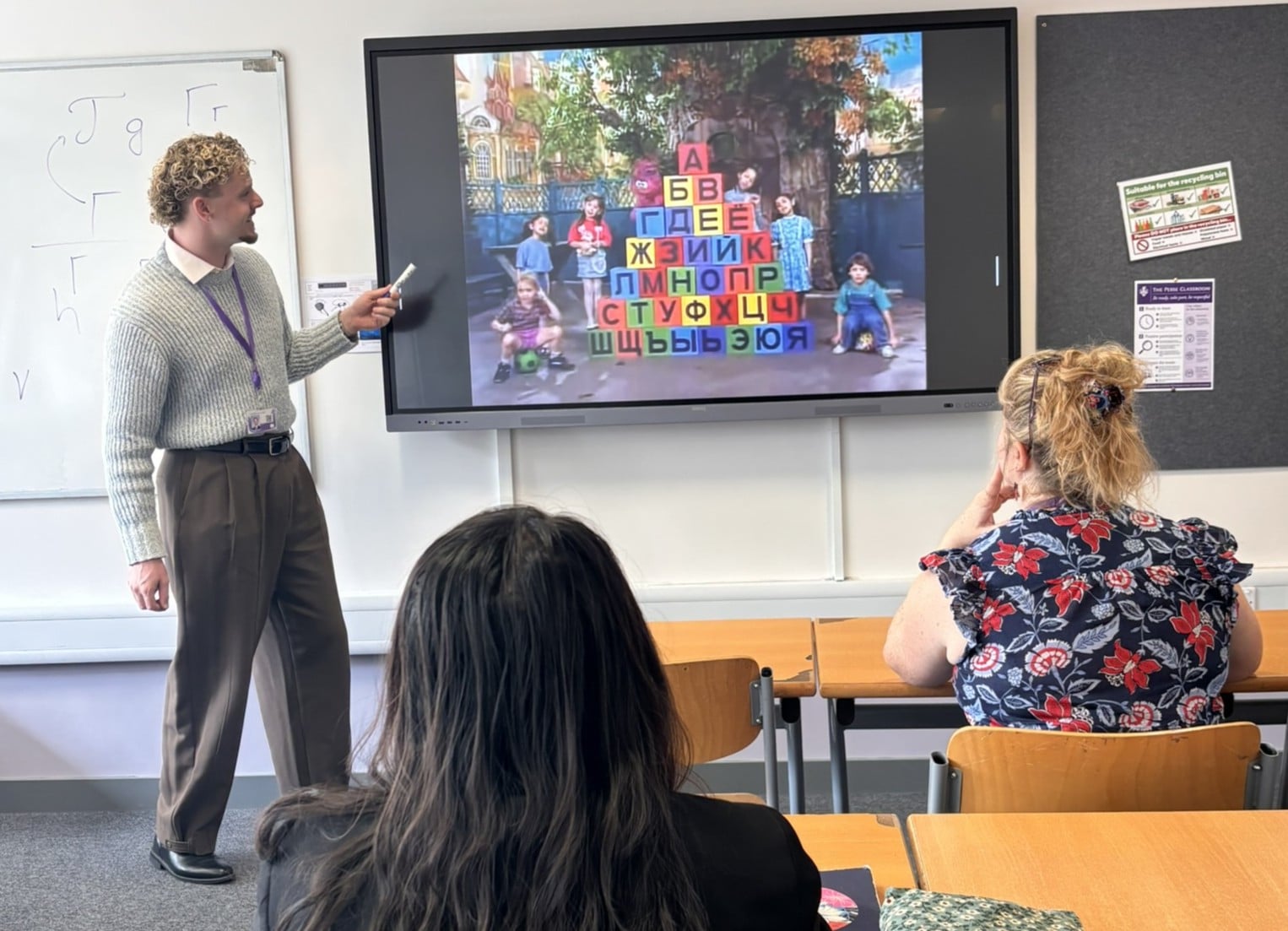
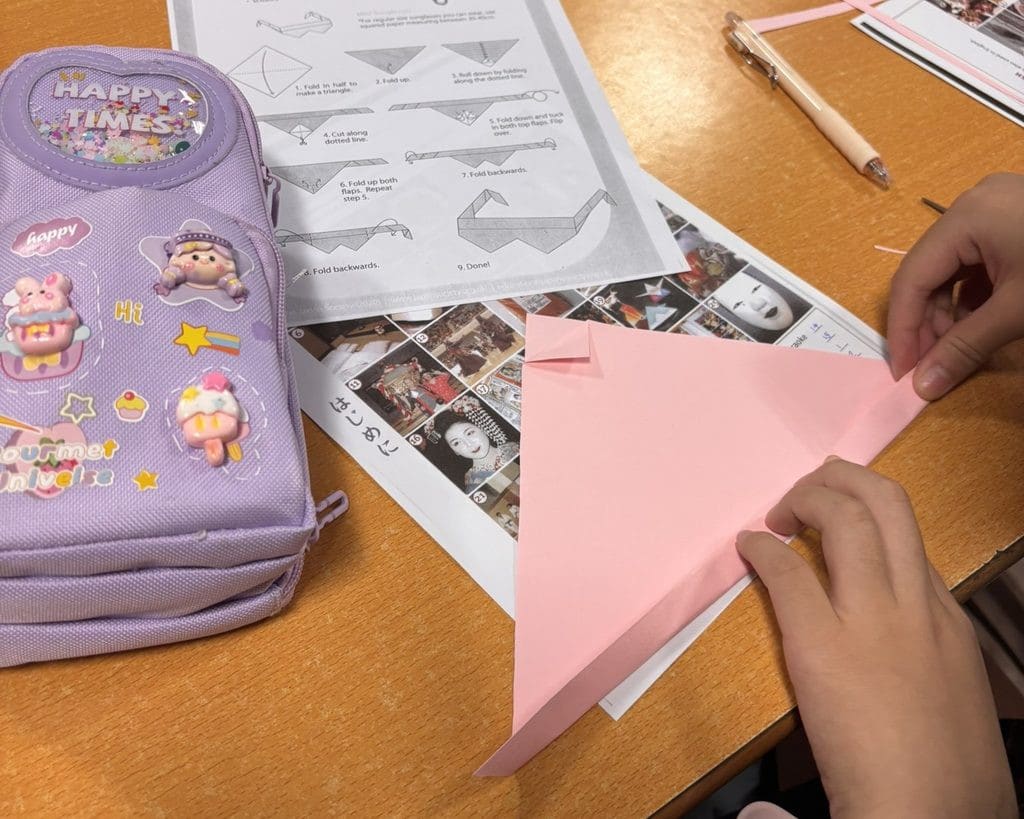
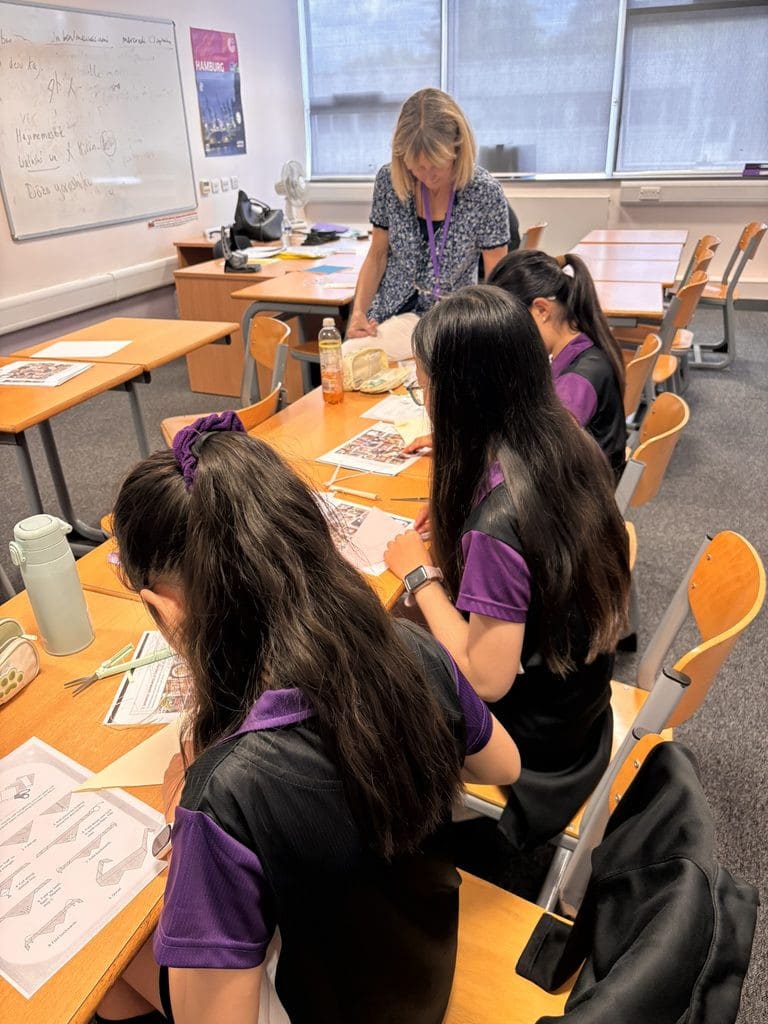
Throughout the week, students discovered languages in unexpected and engaging ways. Tutor-time activities included cracking language codes, unpicking the meanings behind foreign idioms and learning about the traditions of Oktoberfest. Students also had the opportunity to attend a Cyrillic script workshop, try Japanese origami and test their knowledge with a French rugby quiz.
One of the highlights of the week was the Words Without Borders poetry competition, which invited students to share either their own original work or a published poem in another language, alongside a reflection on why it held personal significance.
The competition produced a diverse range of entries, illustrating the many ways language can connect us to our interests, identities, cultures and experiences.
Year 9 student Jessie chose Victor Hugo’s Demain, dès l’aube after first encountering it in French lessons. Reflecting on her choice, she said: “I think it has a very distinct mood change which people don’t expect.”
Rosalind selected a classical Chinese poem written by Wu Zetian, China’s only female emperor. She explained that she was inspired not only by the poem itself but also by the remarkable story behind it. “Overall, I chose this poem because Wu Zetian is an inspiring historical figure for me,” she said. Rosalind was fascinated by how the poem expresses Wu Zetian’s feelings for Emperor Gaozong and forms part of the story that ultimately led to her becoming China’s only female emperor.
Meanwhile, Year 7 student Apollonas chose The Cicadas by Nobel Prize-winning Greek poet Odysseas Elytis because of its connection to his own experiences. “The sea, the islands, the sun and the sound of cicadas make me think of Greece,” he said, reflecting on summers spent there with his family. He particularly enjoyed the poem’s closing lines, explaining that “the ‘z’ sound reminds me of the buzzing of cicadas. I love how the Greek words make you almost hear the cicadas as the poem ends.”
The standard of entries was exceptionally high, with students sharing poetry in a range of languages and demonstrating both linguistic curiosity and a deep appreciation of different cultures and literary traditions.
At a time when technology and AI are playing an increasingly significant role in everyday life, the ability to connect authentically with other people remains invaluable. Language learning helps students navigate different viewpoints, build understanding across cultures and discover common ground, reinforcing that language is ultimately about people.