
Head’s Blog: The Perse School – 400 years and three dimensions the recipe for an excellent education
A tourist admiring an immaculate Cambridge college lawn asked the gardener “How do you get those perfect stripes?”. The reply was “You mow and roll in a straight line and repeat for 400 years!”.
The Perse School was founded in 1615 and began teaching children in 1618. We have thus had plenty of time to reflect on what makes an excellent education and to put those reflections into practice with a strong record of academic, extra-curricular and pastoral successes.
Dr Perse, our founder, was a learned and enterprising man. He achieved degrees in theology and medicine, was Gonville and Caius College Bursar, ran a very successful medical practice, and made a considerable fortune through wise investments in property and business.
In 1615, Cambridge did not have a secondary school. It was not possible for ordinary Cambridge children to receive the education necessary for entry to Cambridge University. The gown was inaccessible to the town. Dr Perse thought this was wrong and set about founding the school that bears his name to give Cambridge children the knowledge, skills, qualities and confidence needed for university entrance and successful adult lives.
As a university lecturer, Dr Perse placed great importance on academic study. He realised schools can only be as good as their teachers, and he required the first Perse teachers (the Master and Usher) to be Cambridge graduates who were solely focused on their teaching. To recruit and retain the best teachers, Dr Perse paid his staff well so that they would “carefully” and “diligently” teach the pupils.
As a Cambridge don, Dr Perse knew that the secret of academic success lay in the learning community. Put simply, place excellent pupils together with brilliant teachers and all parties will spark off one another creating a vibrant learning community where success comes naturally.


In the 1900s, Perse Headmaster Dr Rouse built on this concept by making the pupil community more diverse through the introduction of boarding houses for international and Jewish students. Rouse, who had grown up in multi-cultural Calcutta, believed the more diverse the pupil body, the more pupils would learn from one another, developing academic, emotional and cultural intelligences.
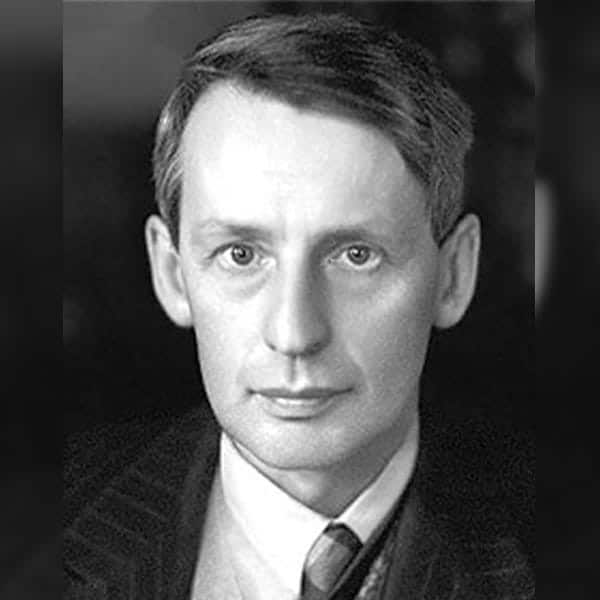
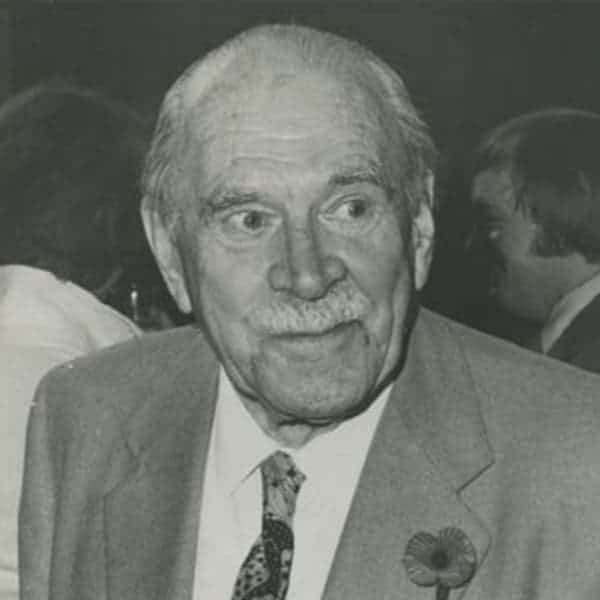
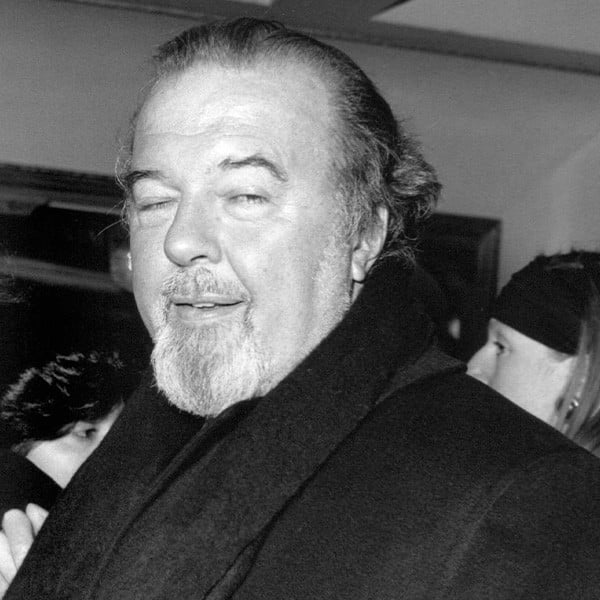
Learning is enhanced by outstanding teaching, and at various stages in our history The Perse has pioneered innovative and highly successful pedagogies. Two examples are the Play Way and Direct Method. The former involved learning by doing, such as acting out plays and performing science experiments, whilst the latter involved the teaching of languages using solely the target language and some charade like prompts. The result was a golden era of Perse academic excellence which included two pupils who went on to win Nobel Prizes for Science (Sir George Thomson and Ronald Norrish), and the future director of the Royal Shakespeare Company and National Theatre (Sir Peter Hall).
Today academic excellence remains one of our three educational dimensions with Perse students achieving some of the best public exam results and university outcomes in the UK. In a typical year, 40-50 Perse students will gain places at either Oxford or Cambridge. This will be supplemented by around 90 medical school offers and 30 offers from leading universities in North America, Europe, Asia and Australasia.
Whilst The Perse is well known for its academic dimension, there is far more to a Perse education than just top exam results and university destinations. Perse Headmaster Frederick Heppenstall introduced games to the curriculum in 1864, recognising the importance of sport not just in keeping pupils fit, but in teaching them essential life skills such as teamwork, communication, resilience and problem-solving.
In 1908, The Perse was one of the very first schools in the world to form a scout troop. Today over 800 Perse pupils take part in the Perse Exploration Society (PES) learning essential skills such as organisation, collaboration, leadership, perseverance and risk management whilst having fun in a technology-free outdoors setting. PES is an incredibly popular form of pupil personal development and digital detox.
The extra-curricular dimension is a very important part of a Perse education. We aim to provide all children with some form of wider learning, whether this is in the form of music, sport, drama, art and outdoor pursuits, or via our clubs and societies programme, which gives children the opportunity to develop new interests, take on responsibilities and become responsible.


The third dimension of a Perse education is the pastoral. Put simply, children cannot be successful if they are not happy. Happy children, content with themselves, their peer group, their teachers and their surroundings, will be confident and willing to apply themselves. They will more readily take the learning risks needed to progress, and feeling secure, they will ask their peers and teachers for support when they need it.
By emphasising the importance of ‘valuing one another’, we create a school culture where all efforts and contributions are valued, and where students are not held back by worrying about what others may think of them. Whilst we take great care to know our pupils so we can support and encourage them, we also recognise we are preparing children for independent adult lives where they will need to be pastorally self-sufficient.
So, we give our pupils a range of wellbeing tools by emphasising the importance of good sleeping, eating and exercising habits. The benefits of talking, listening and sharing, the restorative value of smiling and laughing, and the benefits of positive relationships and giving back to support others. We also help our pupils to build their own moral compasses so they can find the direction needed to be good citizens, employees, employers, partners, parents and friends.
Over 400 years, Perse history has taught us that an excellent education is three dimensional and that the dimensions are mutually reinforcing and equally valuable. To ensure a high-quality 3D education is hard-wired into The Perse and we only recruit teachers who can teach their subject/s well, lead extra-curricular activities and provide pastoral care for children. Excellent 3D teachers are in short supply, but they are worth paying for because, as Dr Perse recognised in 1615, a school cannot be better than the sum of its staff.
The job of any school is to educate children well so that they can make the future better. The future is multi-dimensional and so is an excellent education.
Ed Elliott
Head