Rouse Award: Marcus’ evaluation of muometric positioning system
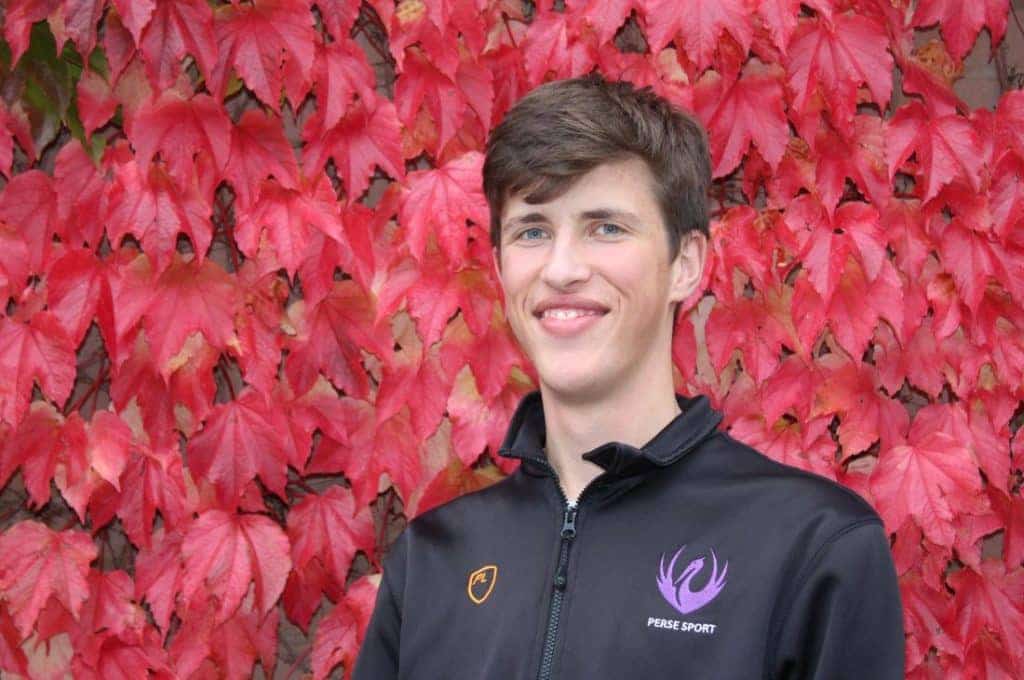
Marcus (Upper Sixth) assessed the effectiveness of a muometric positioning system in underground navigation for his Rouse Award-winning research.
He decided to investigate muons – electron-like particles which ionise radiation – after being inspired by work from a former Perse student.
“I found their project in the physics department and it seemed like an exciting thing to look at because they had carried out an experiment, just not with an application,” said Marcus, who plans to read physics at university.
Following further research, Marcus discovered muons are a hot topic in the physics world with scientists from Tokyo University having used such particles to develop a positioning system for underground navigation last year.
He said: “GPS doesn’t work underground because radio waves can’t penetrate through the ground, so you need a different type of system. There are currently some solutions, but they’re not cheap or easy to use, so there’s still room for better solutions.
“I decided I’d do a similar experiment to what this past pupil had done, but change the set-up to make it applicable to what you’d be doing with this positioning system and then gather some data to look at how good the positioning system might be.”
To carry out his experiment, Marcus borrowed two Geiger counters from the Perse physics department to detect how many muons were coming from the sky by changing the angles between the two receivers,
However, he had initial issues with the time interval between pieces of radiation being detected by both Geiger counters being too long, leading to data “clouded with random probability”.
As such, Marcus programmed an Arduino mini-computer with code for his experiment, bypassing the software connected to the Geiger counters, and was able to get reliable data for his research.
He said he enjoyed having the opportunity to conduct his own tests rather than basing his project simply on existing theories and opinions.
Marcus said: “Because there was an application, I found it a really exciting process to be able to collect my own data, do the data analytics and then be able to compare it to others’ data to form an opinion.
“It was also a whole new topic to anything I’d done in class so there were lots of exciting bits of physics I had to teach myself.
“In fact, when we were interviewed by the Rouse panel one of the judges was a particle physicist at Cambridge University. He had gone through it and come up with some methods I could try going forwards to make my data even more reliable, so that was really cool.”
Read Marcus’ project in full at our Perse research website.