Head’s Blog: Seasonal Reflections
Phew! I have just written my last Christmas card. Every year I question whether my card writing epic is good use of time, paper and postage and whether I should just send an electronic message which saves on all three.
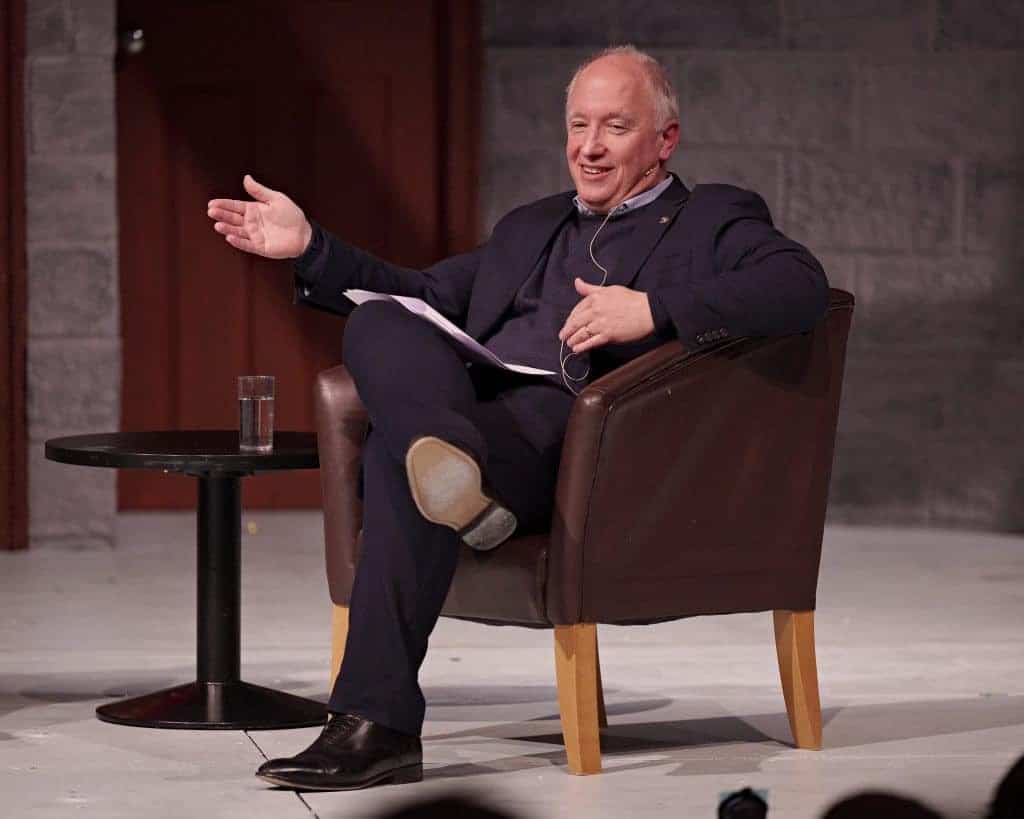
I persist with sending hundreds of cards because I’m a creature of habit, because cards allow me to showcase excellent Perse pupil artwork (thank you Kitty W), and most importantly because a personalised hand-written (if not easily decipherable) message is relational.
The most important measure of a school’s quality is the relationships within it and relational leadership and relational teaching matter. Leaders and teachers who value, care and appreciate get the best out of their staff and pupils. We all like to be recognised, and recognition fosters belonging, care, loyalty, and extra effort.
In the best schools a virtuous circle exists, with teachers going the metaphorical extra mile for their pupils, and pupils in return pulling out all the stops for each other and their teachers. It is the magic of shared endeavour, and it’s powered by relational working, relational teaching, and relational leadership. In the darkening days of December, it can be hard to spot the good deeds that need to be recognised.
But the need for recognition increases as the days shorten, and end of term fatigue sets in. Thank you and well-done cards, personalised messages, and face to face corridor congratulations all boost staff and pupils when they need it most. And relational boosts are infectious – a flurry of congratulations from senior leadership can boost the mood of recipients who, suitably boosted, can boost others.
For those trying to decipher an Ed Elliott hand-written relational message, they typically end with a simple (maximum meaning, minimum words) “best wishes”. I was recently asked what I was wishing for beyond health and happiness for the recipient. This got me thinking about my wishes for 2026, and I will share my top ‘inter-related’ two.
- The speed of educational reform needs to accelerate to reflect the pace of technological and employment changes.
Nobody wants to take risks with children, so educational reform is a cautious process. But overly cautious reforms are themselves risky because they may result in children being inadequately prepared for a fast changing world. Today’s GCSEs and A levels were born out of Michael Gove’s National Curriculum Review of the early 2010s but think how much has changed since then.
Are qualifications designed pre AI the best preparation for an AI world? Gove’s GCSE and A levels are heavy on content: we do need knowledge to make sense of the world, but is the factual recall of quite so much knowledge the best preparation for our AI enhanced futures? In an AI world should we be valuing questions (prompts) as much as answers? Should we be emphasising even more the importance of critical thinking, creativity, cognitive agility, synoptic linkages, judgement and ethics?
The government’s Curriculum and Assessment Review, chaired By Becky Frances, recommends an evolutionary approach to curriculum change, which will be slowed further by the requirements for consultation and accreditation. The first new A levels and GCSEs may not be sat until the 2030s. There is a risk that changes could be too little, too late. Independent schools like The Perse must use their independence and resources, to accelerate the process of curriculum development.
For us this means sticking with Ofqual regulated, Department of Education approved, GCSEs and A levels for these are the “gold standard, legal tender” of UK qualifications, but supplementing them with skills and experiences that ensure students are well prepared for the opportunities that lie ahead. We are keen to hear from parents, alumni, and employers about what these additional skills and experiences might be (please feel free to email your thoughts to hmoffice@perse.co.uk).
- All the main UK parties are seeking economic growth, and I share their wish.
Economic growth matters, especially to the young, because growth is about opportunity – it is the bright light at the end of the educational system that students are aiming for. Teachers want to see their pupils leaving education for an employment world full of opportunities and possibilities, where the main pre-occupation is not will there be a job, but which of the many jobs is the right one for me? And if there isn’t a job for you, in a growing economy you can create your own through entrepreneurship and innovation. Opportunities are exciting, they invigorate, they motivate, and they help people feel better about themselves and their situations.
Economic growth has so far proven elusive, but maybe AI can deliver the productivity improvements and cost savings that could turbo-charge the economy. And who better to lead this period of rapid growth and opportunity than today’s students who will be the first generation of AI natives? So, it is even more important that we crack on and enhance education so that it provides pupils with the knowledge, skills, values, judgement, creativity, and agility needed to use AI well so that economically, socially and environmentally we can make the future better.
Ed Elliott
December 2025