Head’s Blog: The Psychology of Headship … and what it says about Heads and Education
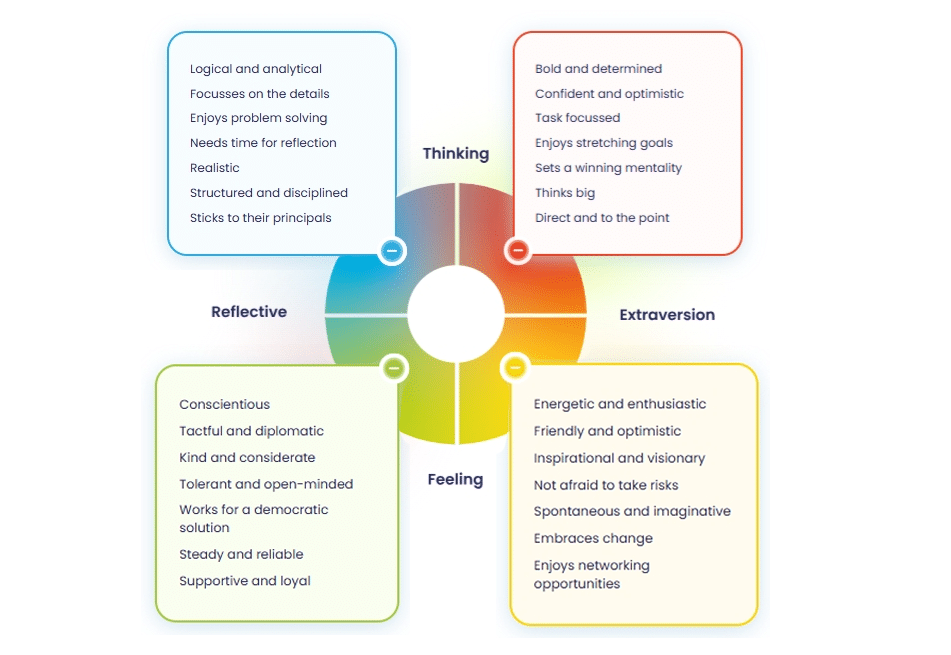
A few months ago, I completed some behavioural preference tests – the type that categorise you into broad behavioural ‘colours’. There is red – positive and confident leaders; yellow – creative and imaginative thinkers; green – emotionally intelligent team builders, and blue – logical, practical, organisers.
I confess to having doubts about behavioural assessments. Personalities are complex and not easily categorised into something that can feel like an astrology chart. (For those of you wondering I’m a Gemini, but apart from being a twin, I don’t think I exhibit many of the behaviours associated with my star sign).
But if you don’t take behavioural preference testing too seriously, it can be a useful starting point for some self and team reflections.
Adapted and Natural Behaviour
The assessments I took were designed to record my ‘adapted’ and ‘natural’ behavioural preferences. Adapted are the conscious preferences I have acquired – how nearly 20 years of headship have modified my behaviours. Natural represent my instinctive behaviours – perhaps my pre-Head or even my off-duty (although Heads rarely are) less conscious way of doing things.
The Demands of Headship: Being Multi-Coloured
I was pleased – but not surprised – that my adapted behaviour assessment showed I was pretty much equally coloured. This makes sense as it reflects the demands of headship. Heads are leaders (red) setting strategy, standards and culture in their schools. Heads are creative and imaginative (yellow) envisaging new approaches to education so that pupils are well prepared for fast changing (AI) futures.
Schools are people businesses, so Heads must be ‘green’ to get the best out of the big people (staff) and the small people (pupils). Schools are complex, so Heads have to be good with detail (blue) so that timetables and duties work, and the school is compliant with safeguarding and health and safety requirements.
After reading my ‘equal colours’ adapted behaviour report, I was starting to have more faith in behaviour preference assessments. As my granny used to say, “you like what you like”.
Confronting My Natural “Blue”
However, I was less keen on my natural behaviour report. Headship may have made me multi-coloured, but according to the report I was born ‘blue’. ‘Red’ leaders, ‘yellow’ creatives, and ‘green’ team builders all have obvious selling points, but ‘blue’ feels a bit “clipboard and spreadsheet” and not something you necessarily want to aspire to.
My first response, which I admit is a bit ‘blue’, was to burrow into the detail of the report and poke holes in the methodology. How could any questions asked now in my 18th year of headship, elicit responses that could reliably indicate my natural pre-headship behaviours? I’m still not convinced they can.
Why Blue Behaviours Matter
But then I got thinking. Blue behaviours may not be exciting, but they are essential. Safe and successful schools need their blue leaders – anyone familiar with the single central register which meticulously documents the safeguarding checks required for staff appointments, or the intricacies of exam board assessment criteria will appreciate this. Missing details in these examples has significant consequences for school compliance, pupil safety and pupil outcomes.
A Head with an eye for detail spots and rewards pupils who have gone “the extra mile”, and those who may need some encouragement to extend themselves. The ‘blue’ Head will be happy keeping an eye on pupil attendance, punctuality, and behaviour which are essential in maintaining school standards and outcomes.
Anyone who doubts the importance of blue traits should read ‘The Checklist – How to get things right’ by Atul Gawande. (Thank you to The Perse parent who recommended it!). There is nothing more blue than a checklist, and whilst many checklist processes can be digitised, their importance to safe and effective practice, whether in surgery or air transport, cannot be under-estimated.
Duty as a Core Leadership Value
Buried in the behavioural descriptors for blue is another important trait – a strong sense of duty. Duty is a rather old-fashioned word, but I really identify with this ‘blue’ trait. Pupils only have one education, so I have duty to ensure it is an excellent one. I am the 42nd Head of a school dating back to 1615, so I have a duty to leave it in an even better state than I found it (back in 1997). Schools can only be as good as their staff, so I have duty to look after staff (within reasonable cost parameters) so they can look after the children.
Educating for a Multi-Coloured Future
I have come to terms with my inner ‘blueness’, whilst firmly believing that schools should educate children so that they can all be multi-coloured in their behavioural preferences.
Students with good leadership skills, emotional intelligence, creativity, imagination, and an eye for detail will be well placed for whatever the future asks of them. I hope they will also have a sense of duty. These skills and qualities are an essential part of an excellent education and something we take very seriously at The Perse.
Ed Elliott