Pupils secure international victory in neuroscience competition
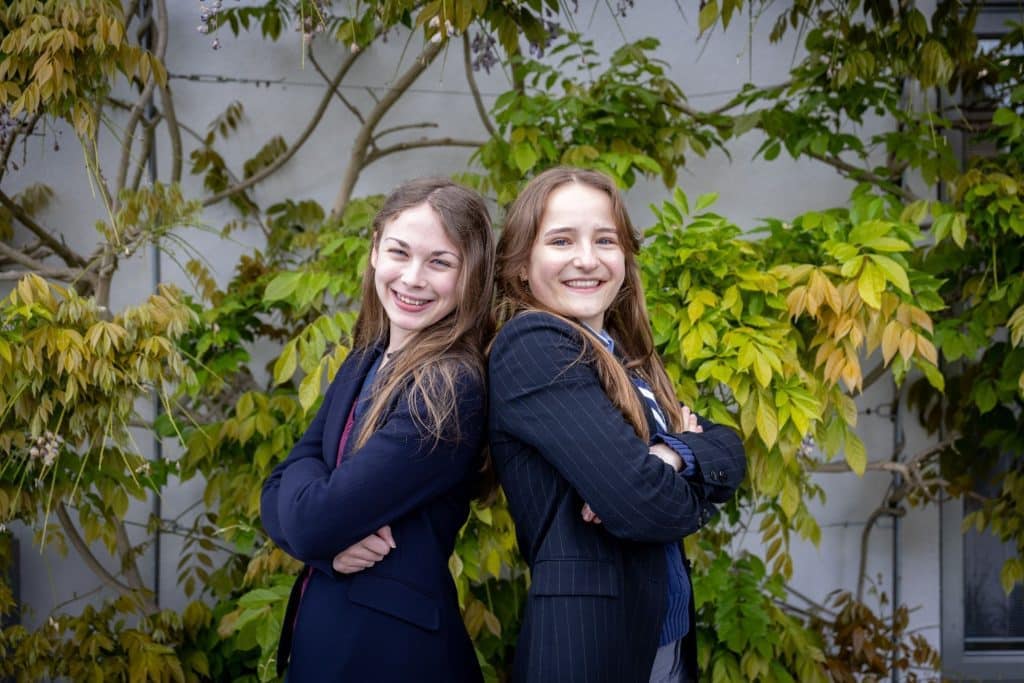
In an outstanding achievement last month, pupils Hannah, Anya, and teammate Cindy (participating from Boston) were named the global winners of the High School division at the International Youth Neuroscience Association (IYNA) Ideathon 2026.
This prestigious global competition challenges young minds to dive deep into complex science. This year’s prompt focused on a rapidly growing field of medicine: how the brain and body interact during aging and neurodegenerative diseases. Teams were asked to design a brand-new scientific experiment, choosing between basic science, clinical, or epidemiological approaches to explore these vital connections.
The team tackled the challenge with a fascinating and incredibly innovative proposal. They investigated whether drugs currently used to treat asthma could be repurposed to treat Alzheimer’s disease. Because the lungs and the brain share certain inflammatory pathways, the team hypothesised that targeting this ‘lung-brain axis’ could open up entirely new doors for treating neurodegenerative conditions.
Reflecting on why they chose this ambitious track, Hannah and Anya explained that the team’s motivations went far beyond winning:
“When we first entered the IYNA Ideathon, we knew we would be competing against around 160 high school teams internationally, and our main goal was just to learn more about interaction between the nervous system and the rest of the body, specifically the lung-brain axis for our project, as well as gaining more insight into how research is actually conducted.”
A Two-Stage Gauntlet
The competition was fierce and took place in two rigorous stages:
- Stage 1 (The Proposal): The team went head-to-head with roughly 130 to 150 high school teams from around the world. They had to submit a comprehensive 2,000-word scientific essay detailing their experimental design, which was then strictly evaluated by experts in the field.
- Stage 2 (The Live Defense): Only the top 10 teams in the world made the cut for the grand finals on April 19. Our team had to deliver a live, 8-minute presentation over Zoom, followed by a high-pressure, 5-minute Q&A session where they defended their ideas against a panel of professional judges (including Dr. Upasna Srivastava, Dr. Adriana Gutierrez, Alena Smith, and Dr. Shuzhang Yang).
Facing such stiff international competition, the team kept their expectations modest, making the ultimate result even more thrilling.
“The entries we had seen seemed really complicated, so it was a surprise to hear that we had even made the final (top 10),” the girls admitted. “But we were super happy to be named global winners after the final presentation round.”
An International Collaboration
Not only did our students hold their own against the global competition, but their presentation and academic grit completely blew the judges away, securing them First place in the world for the High School division.
The girls recounted that the experience was heightened by the unique opportunity to collaborate across borders and connect with industry leaders:
“It was a privilege to be able to work alongside Cindy in the US, and present to experts in the field, with one of the judges being specifically involved in asthma and neurodegenerative disorder research.”
We are immensely proud of Hannah, Anya, and Cindy for their dedication, curiosity, and world-class scientific thinking. They have demonstrated beautifully what our students are capable of on an international stage. Well done, team!