Physics
Physics at The Perse Sixth Form combines rigorous academic study with extensive practical work, helping students develop a deep understanding of the fundamental principles that govern the physical world. Small-group teaching by expert subject specialists allows plenty of time to explore concepts in depth, apply ideas to unfamiliar situations and engage with material beyond the A level specification. Surrounded by ambitious and intellectually curious peers, students develop the knowledge, problem-solving skills and independence needed for success at university and beyond.
Practical physics at the heart of learning
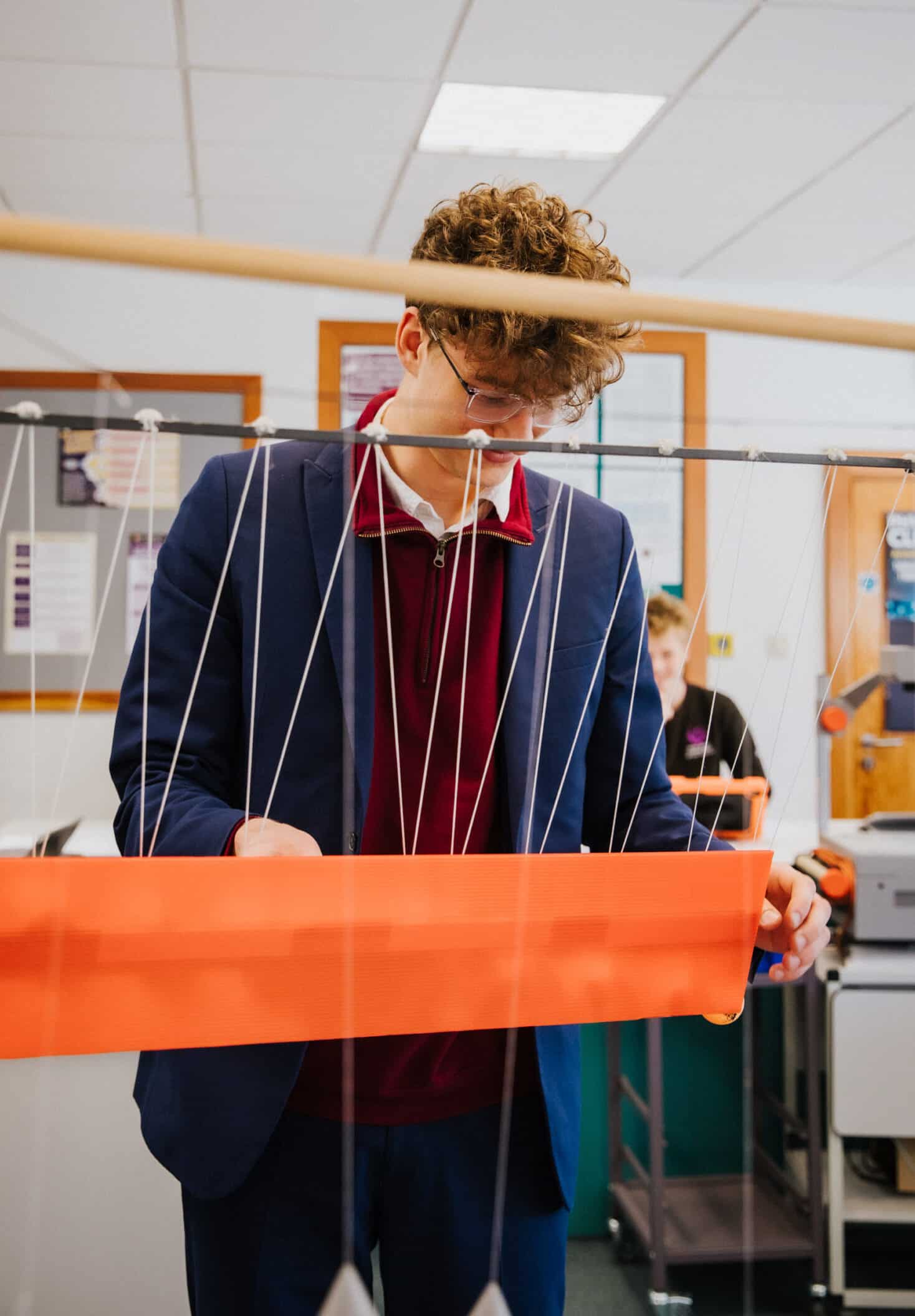
Practical work is central to Physics at The Perse. Students benefit from superbly resourced laboratories and regular opportunities to develop experimental, analytical and investigative skills. Alongside the required practical programme, students can undertake open-ended experimental projects that encourage independent thinking and scientific enquiry.
Teaching focuses on building secure fundamental understanding and applying it to increasingly challenging problems. Extension material is routinely embedded into lessons, helping students develop the thinking and study skills needed for higher education and preparing them to engage confidently with advanced scientific ideas.
Learning beyond the specification
Students are encouraged to explore Physics beyond the classroom through a wide range of enrichment opportunities. All Sixth Form physicists take part in Olympiad competitions, while those wishing to delve deeper can join the after-school Physics Extension Group, Engineering Club and Rocketry Society.
Leadership opportunities are an important part of the department’s culture. Sixth Form students help with Physics lessons, run clubs for younger pupils, including Aviation Club, and contribute articles to the school’s Physics newsletter.
The department’s Cambridge location provides access to outstanding enrichment opportunities, including regular lectures at the Cavendish Laboratory, alongside visits to the Sizewell Nuclear Power Station and the Culham Centre for Fusion Energy.
University preparation and future pathways
Physics develops highly transferable skills in mathematical reasoning, analytical thinking, problem-solving, data interpretation and experimental investigation. It provides excellent preparation for university courses in Physics, Engineering, Natural Sciences, Mathematics, Computer Science, Astrophysics and related disciplines.
Many students combine Physics with Mathematics and Further Mathematics, while others successfully pair it with subjects ranging from Chemistry and Economics to Computer Science. Typically, well over half of Perse physicists go on to study Physical Sciences or Engineering at university, with around a quarter progressing to Mathematics or Computer Science and many others pursuing Medicine or Economics.
Recent highlights
Perse physicists continue to achieve outstanding success in national competitions. In the British Physics Olympiad, students recently secured two Top Gold awards, with one student invited to the prestigious Easter Training Camp and recognised at The Royal Society.
Perse students were also part of the winning company in the National Final of the UK Space Design Competition, where 13 students from Years 10 to 13 designed a lunar settlement in less than 24 hours before presenting their work to a panel of expert judges.
Further successes include a Year 12 student winning the Best Individual Video category in the Institute of Physics’ Quantum on the Clock competition, and the Year 12 Greenpower Race Team finishing fifth in its category at the Lotus Hethel race.
Assessment details
Three written examinations are taken at the end of the Upper Sixth, alongside an internally assessed practical component.
The examining board is AQA.