Computer Science
Building the digital skills of the future
From their very first lessons in Computer Science, pupils develop real computing skills through a curriculum that progresses from unplugged problem-solving to coding, artificial intelligence and text-based programming. Along the way, they learn how computers work, think computationally and use technology creatively to solve real-world problems.
Learning through innovation
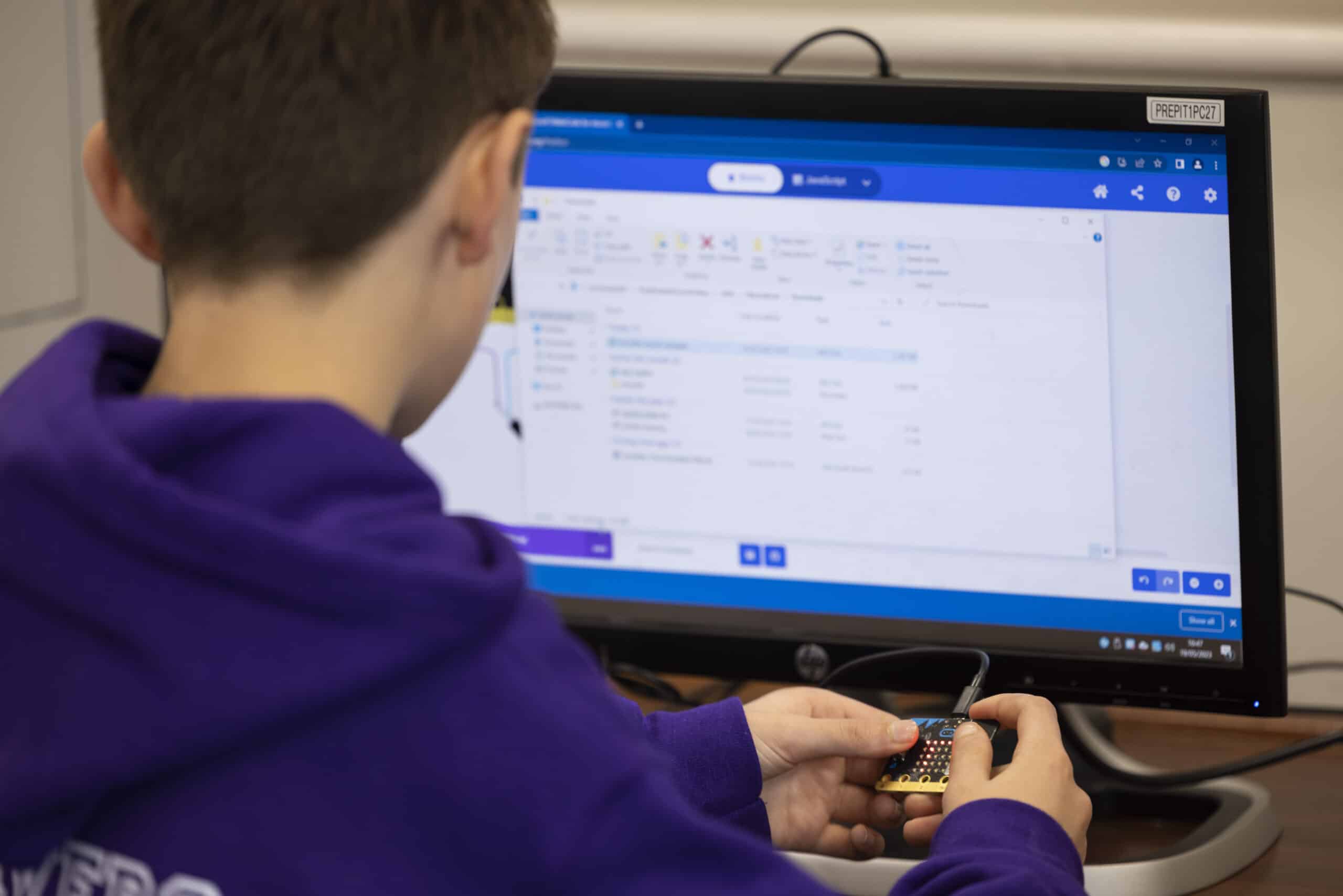
Our progressive Computer Science curriculum builds knowledge and confidence from Years 3 to 6 through practical, hands-on learning. Pupils create animations and games in Scratch, programme Micro:bits, explore the opportunities and ethical considerations of AI, and take part in cross-curricular projects that bring computing to life. Alongside developing technical skills, pupils are inspired by the achievements of computing pioneers including Ada Lovelace, Alan Turing and Katherine Johnson, discovering how innovation has shaped the modern world.
Beyond the classroom
There are plenty of opportunities to develop computing skills beyond lessons. Pupils can join Coding Club, while members of the Cyber Squad take on positions of responsibility, helping to maintain equipment and support the smooth running of technology across the school. A cross-curricular Computer Science and Design Technology project also challenges pupils to build their own movable vehicle and programme it using a Micro:bit.
Computing in action
During Inspiration Week, pupils visit the Centre for Computing History in Cambridge to explore the evolution of technology. Many also take part in the Bebras Computational Thinking Challenge, with high-scoring pupils progressing to the prestigious Raspberry Pi Coding Challenge. More recently, Year 5 pupils have chosen to investigate artificial intelligence as part of their Perse Global Perspectives research projects, demonstrating how computing connects with wider questions about the future.