Remembering the Perseans who served in wartime
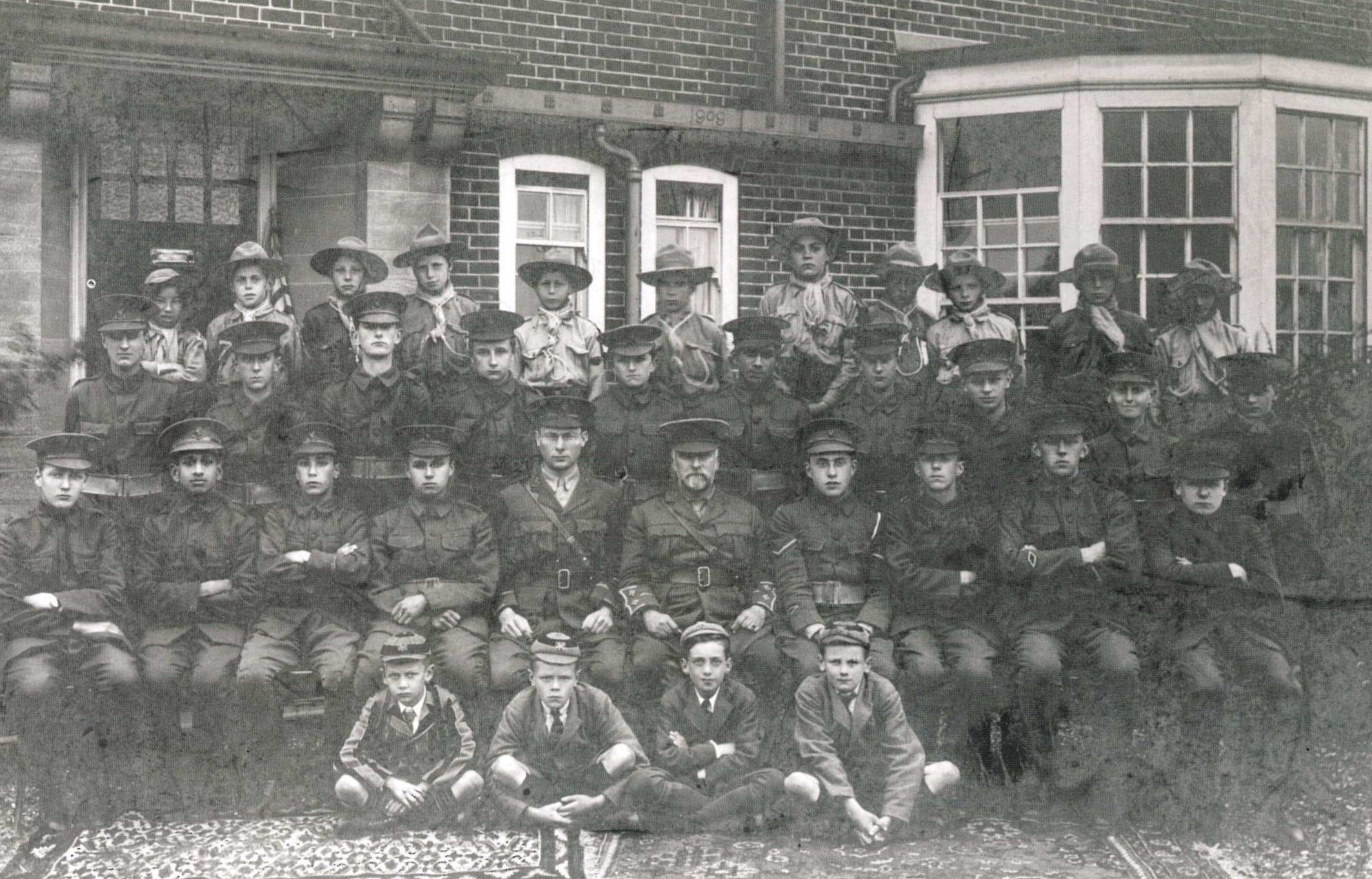
Today, the Perse community paused to remember those who served and lost their lives in conflict. The School’s archives preserve the stories of generations of Perseans affected by war, both at School and while serving overseas.
When the First World War began in 1914, large numbers of Old Perseans signed up to serve. They joined regiments and services across Britain and the wider Empire, while many served with the local Cambridgeshire Regiment and Loyal Suffolk Hussars. Back at School, letters sent home by former pupils provided a connection with those serving overseas, with many published in The Pelican.
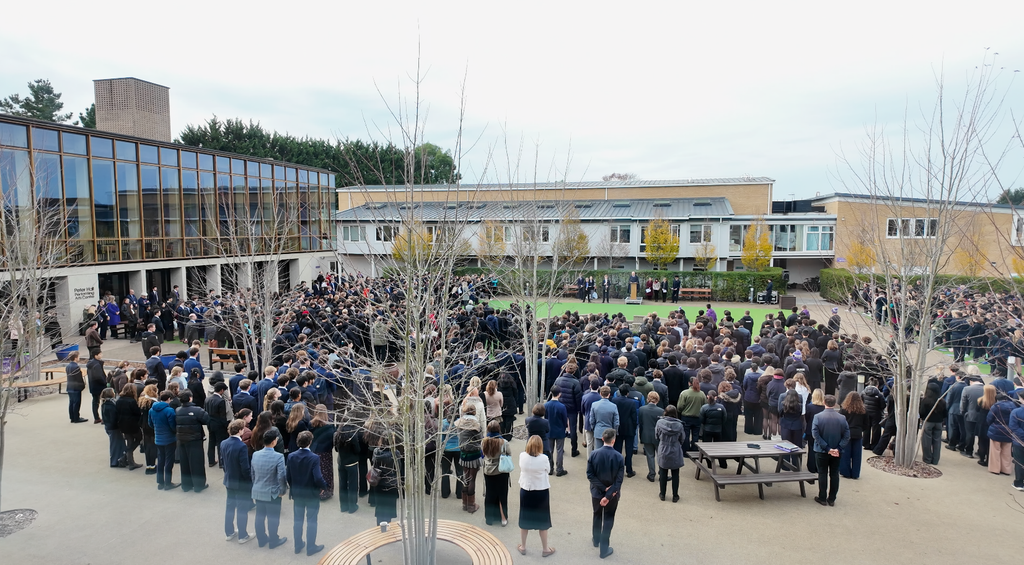
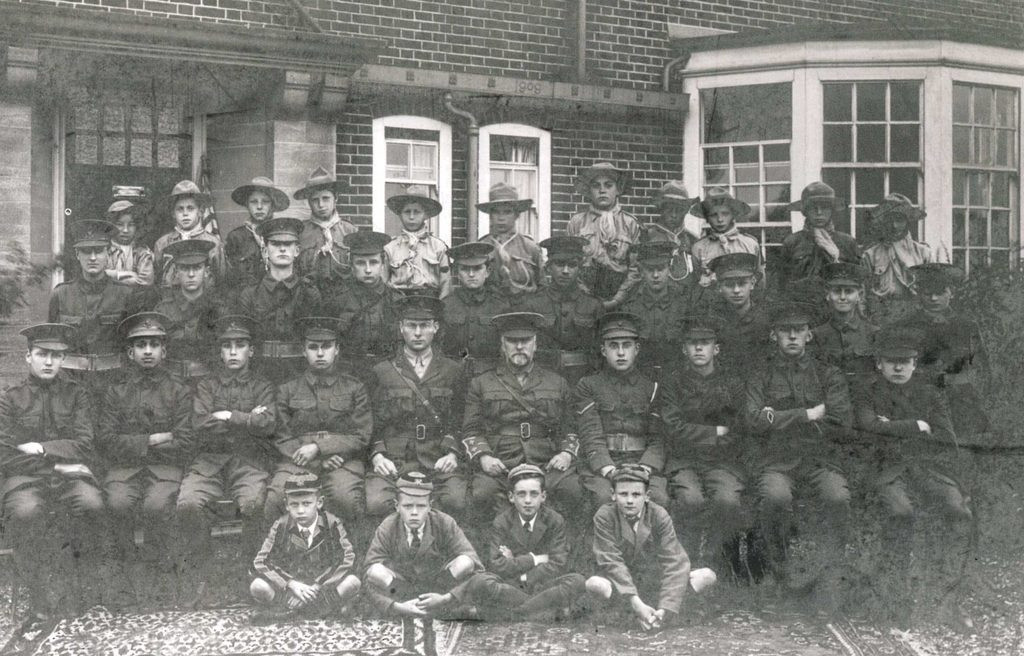
The war was also reflected in School life. Under Headmaster W. H. D. Rouse, the Officers’ Training Corps had become firmly established at The Perse, and photographs from the period capture pupils at the School in military uniform.
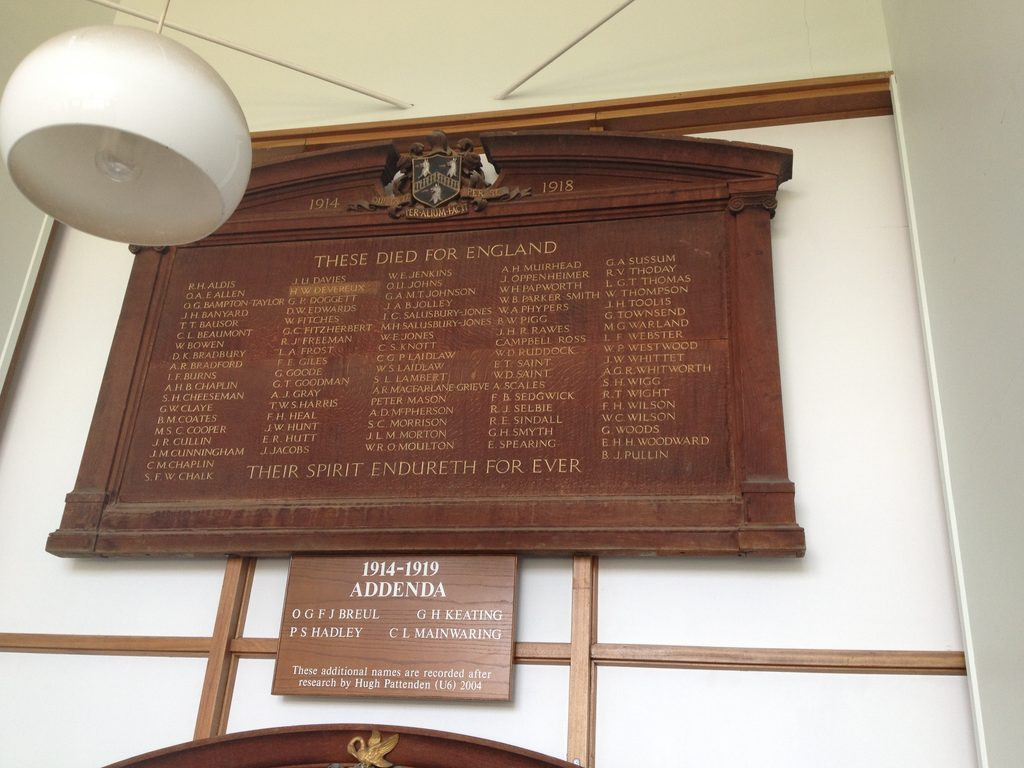
The impact of the war on the Perse community was immense. Around 600 Old Perseans served and almost 100 lost their lives, alongside two masters. The youngest former pupil to die was just 17, while six former head boys and three sets of brothers were among those killed. On the first day of the Battle of the Somme alone, 1 July 1916, five Old Perseans lost their lives.
The School later created a permanent memorial to those who had died. Part of its Tercentenary fund was used to extend the playing fields on Hills Road and commission a roll of honour, created by Old Persean Cyrus Johnson. The memorial was unveiled by Lord Horne in front of members of the School and relatives of the fallen. More names were subsequently discovered and, in 2004, an additional panel was installed beneath the original memorial.
Just over two decades later, war again transformed life at The Perse. During the Second World War, the School welcomed refugees and children from families evacuated from London. The governors waived tuition fees for many of the foreign refugee children.
Daily school life also changed. Classrooms were reinforced against bombing, while Scouts and the School Corps prepared to provide first aid and other assistance in an emergency. At the Prep, pupils carried gas masks, collected conkers for the war effort and took part in “Digging for Victory”, while air-raid precautions included brickwork and extensive timber supports.
The threat became very real on 16 January 1941, when incendiary bombs struck the School and the Catholic church opposite. Despite severe damage from fire and water, the School reopened the following Tuesday.
Forty-four Old Perseans lost their lives during the Second World War. In 1947, an appeal was launched for a new memorial. Two years later, a new memorial tablet was unveiled in the School hall and the memorial gates were built at the School’s playing fields on Hills Road. Those gates remain in place today.
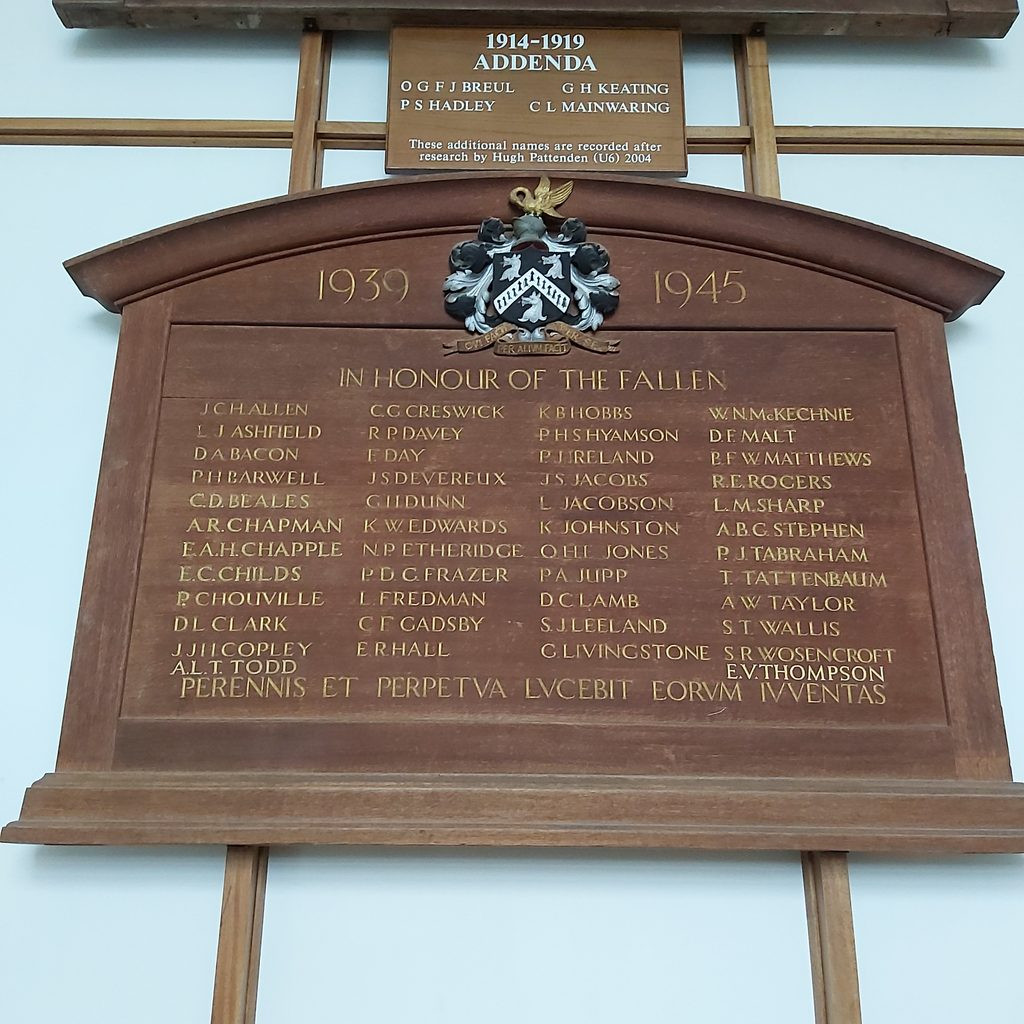
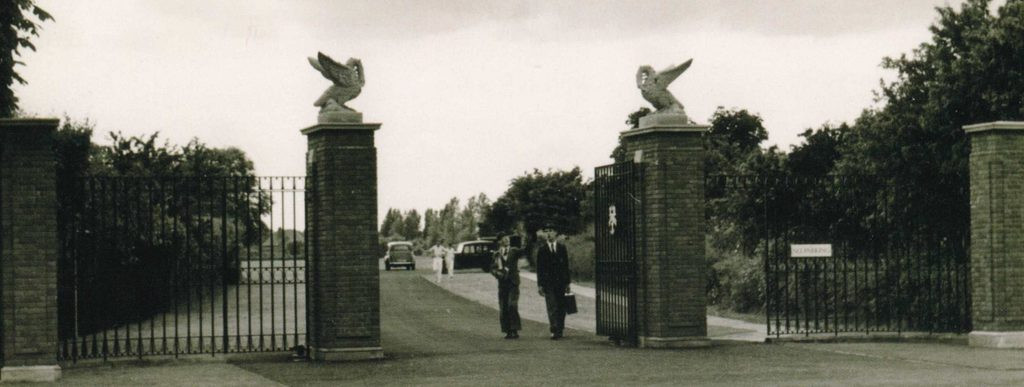
More than a century after the end of the First World War, these memorials continue to connect today’s Perse community with the pupils and Old Perseans who came before them.
Today, we remember them.